Reliable power is one of the most important parts of any mobile surveillance deployment. A trailer can have advanced cameras, AI analytics, lighting, audio, and local or cloud-based storage, but none of it matters if the system cannot stay online. That is why the first step in solar-powered security is understanding exactly how much energy the trailer will use.
Here are the key factors that help determine the right solar power generation requirements for a mobile surveillance trailer.
Calculation #1: Start With the Total Electrical Load
Every powered device on a trailer adds to the total energy demand. In simple terms, an electrical load is any device or component that uses electricity to do something useful [1]. That matters because the more equipment a surveillance trailer carries, the more power the system must generate and store to keep everything running.
For SkyCop, this means evaluating the full loadout before sizing the solar system. That includes camera count, video storage, networking gear, lighting, audio components, and any advanced features such as PTZ, thermal imaging, or license plate recognition. Since power equals voltage multiplied by current [1], understanding the total wattage drawn is the foundation for designing a dependable trailer power system.
Calculation #2: Factor in Runtime, Not Just Equipment Count
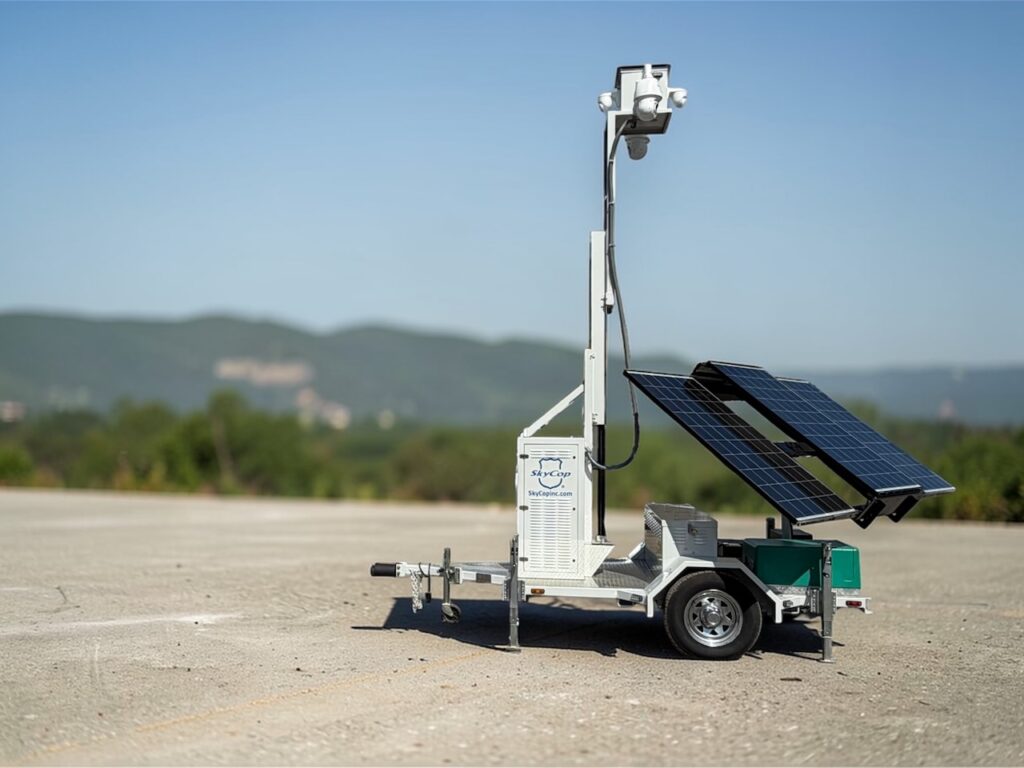
Knowing what is on the trailer is only part of the equation. You also need to know how much electricity a device is using right now [1] and how much energy it will consume over time. A system designed for round-the-clock operation will need a different solar and battery setup than one with a limited duty cycle.
SkyCop accounts for this by determining how long the trailer needs to run and whether the unit must support full 24/7 continuous operation. That is especially important because SkyCop trailers are built for continuous monitoring, not motion-only capture. Battery bank sizing must match that runtime expectation so the trailer can maintain uninterrupted security coverage even when solar production drops.
Calculation #3: Solar Output Changes by Location
Solar generation is not the same everywhere. Geographic factors can create a 25-40% variance in solar panel performance between different regions [2], which is why location has to be part of the design process. Areas in the “solar belt” between 35°N and 35°S latitude receive optimal irradiance of 4-7 kWh/m2/day [2], while higher-latitude regions often receive less.
That is why a trailer in places like Arizona or Florida can often generate solar energy more consistently than one in Illinois. SkyCop addresses this by analyzing region and seasonal sunlight variation during the engineering process. Instead of treating solar as a stranded add-on, the company sizes each array and battery bank based on both equipment load and regional sunlight data to help support dependable year-round performance.
Calculation #4: Prepare for Winter, Snow, and Low-Sun Conditions
Cold-weather states create another layer of complexity. Solar panels can still produce power in winter, but cloud cover can reduce solar panel output by 50-90% depending on cloud density and type [2], and snow can physically cover panels and block generation. In northern climates, that can reduce available solar gain for extended periods.
This is why backup planning is essential. SkyCop offers hybrid solar + generator systems for long-term deployments or more power-intensive configurations. When battery levels drop, select trailers can automatically activate generator assist to recharge the batteries and restore operation. That self-healing power cycle helps maintain smooth and continuous performance even when weather conditions are working against solar production.
Calculation #5: Account for Battery Recovery Time
Powering the system is only part of the equation. The solar array must also be able to recharge the batteries after they have been discharged.
In real-world conditions, batteries are often drawn down overnight or during periods of low sunlight. When solar production returns, the system has to support the active load while also pushing energy back into the batteries. If the array is only sized to match daily consumption, recovery can be slow or incomplete.
Panel size directly impacts how quickly the system can return to a full charge. Depending on load and sunlight conditions, recovery may take a single day or multiple days. This is especially important when accounting for the natural 12-hour loss of solar production each night. By factoring in both energy use and recovery time, SkyCop ensures each trailer is designed to maintain consistent operation—not just meet minimum power requirements.
Skycop Powers Your Security Strategy With the Right Design
Solar-powered surveillance works best when the system is engineered around real operating conditions, not assumptions. From calculating total electrical load to accounting for runtime, geography, and winter weather, the right design makes the difference between occasional uptime and dependable protection.
SkyCop builds mobile surveillance trailers with integrated solar, intelligent power management, and backup options tailored to each deployment. If you are planning a mobile security rollout and want a system sized for your actual site conditions, connect with SkyCop to build a trailer solution designed for dependable performance from day one.
Source Chart:

Advanced Mobile Surveillance Technology That Adapts to Changing Security Environments
Security priorities rarely stay in one place. A construction project may need protection for several months, while a festival or…
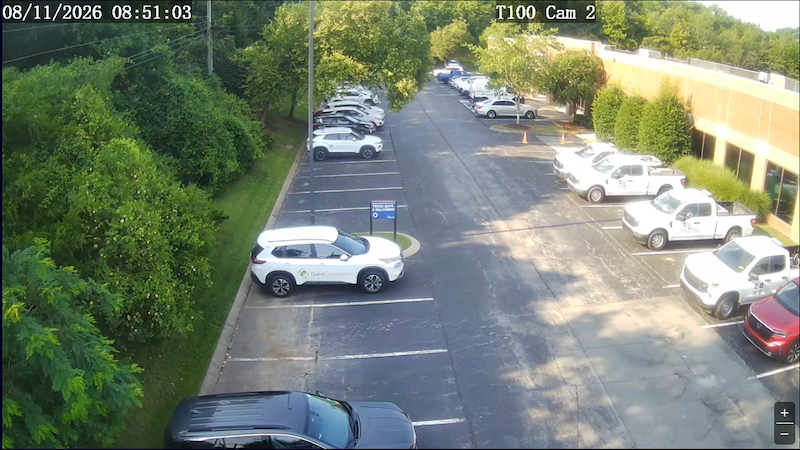
Addressing Recurring Break-ins with a Mobile Surveillance Trailer for Hamilton Creek in Nashville TN
Client’s Needs Hamilton Creek was facing recurring break-ins at their facility. Dealing with unauthorized intrusions creates an environment of vulnerability…
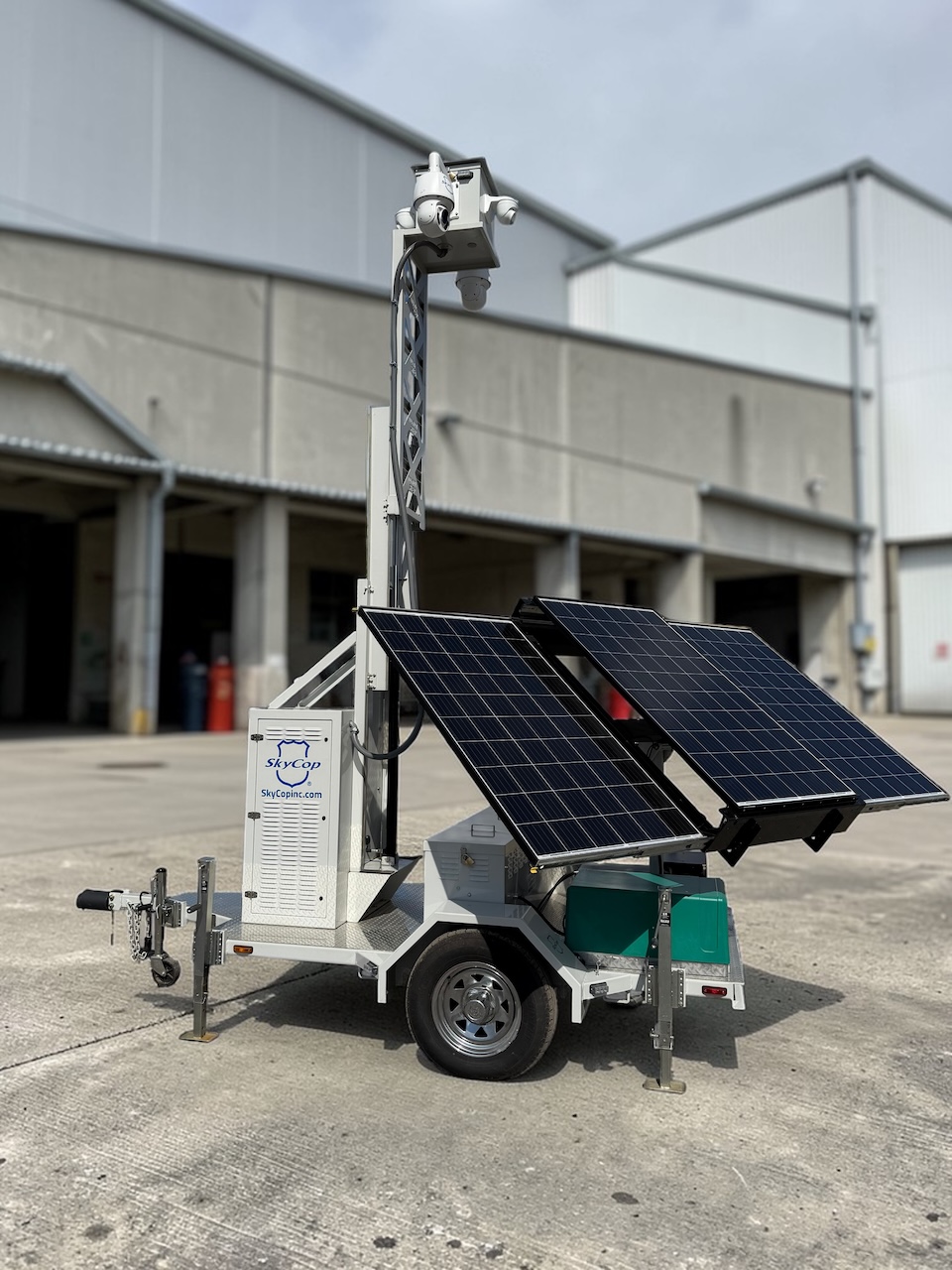
Capital Expense vs. Operational Budget: Should Your Organization Lease or Buy a Mobile Security Trailer?
Mobile security trailers can provide flexible surveillance for construction sites, parking facilities, public events, critical infrastructure, and other locations that…