Fixed surveillance cameras are an important part of many security systems, but they can only capture what falls within their field of view. When a property has large parking lots, temporary work zones, side entrances, equipment yards, event spaces, or changing traffic patterns, blind spots can form quickly. These gaps can limit visibility, delay response, and leave high-risk areas under-monitored.
Mobile surveillance trailers help close those gaps by giving businesses, municipalities, and property owners a flexible way to extend coverage where it is needed most. With rapid deployment, visible deterrence, AI detection capabilities, and real-time monitoring support, mobile surveillance trailers can help monitor hard to see areas and trigger alerts when activity requires attention.
Why Blind Spots Create Security Risks
A blind spot is an area that cannot be clearly seen by an existing camera. These gaps may be caused by camera angles, distance, obstructions, poor lighting, buildings, parked vehicles, or changes to the property layout. Strategic camera placement is important because vulnerable areas are often found by looking at the property from an intruder’s perspective [1].
For sites with active operations, blind spots are more than an inconvenience. They can affect theft prevention, trespassing response, employee safety, liability protection, and evidence collection. If a camera cannot clearly capture the activity, security teams may not have the information they need to act quickly or review an incident later.
Fixed Cameras Have a Limited Field of View
Fixed cameras are valuable, but they are installed in one location and aimed at a specific area meaning their coverage is limited by their position. Even when the camera is placed correctly, it may not be able to capture activity around corners, behind equipment, past temporary barriers, or in areas that were not a concern when the system was first installed.
Security systems work best when cameras support each other by monitoring entry points, movement patterns, and vulnerable spaces [2]. However, not every site has the infrastructure, time, or budget to install permanent cameras every time a new blind spot appears. This is where mobile surveillance trailers can provide an important advantage.
Mobile Trailers Can Be Positioned Where Coverage Is Needed Most
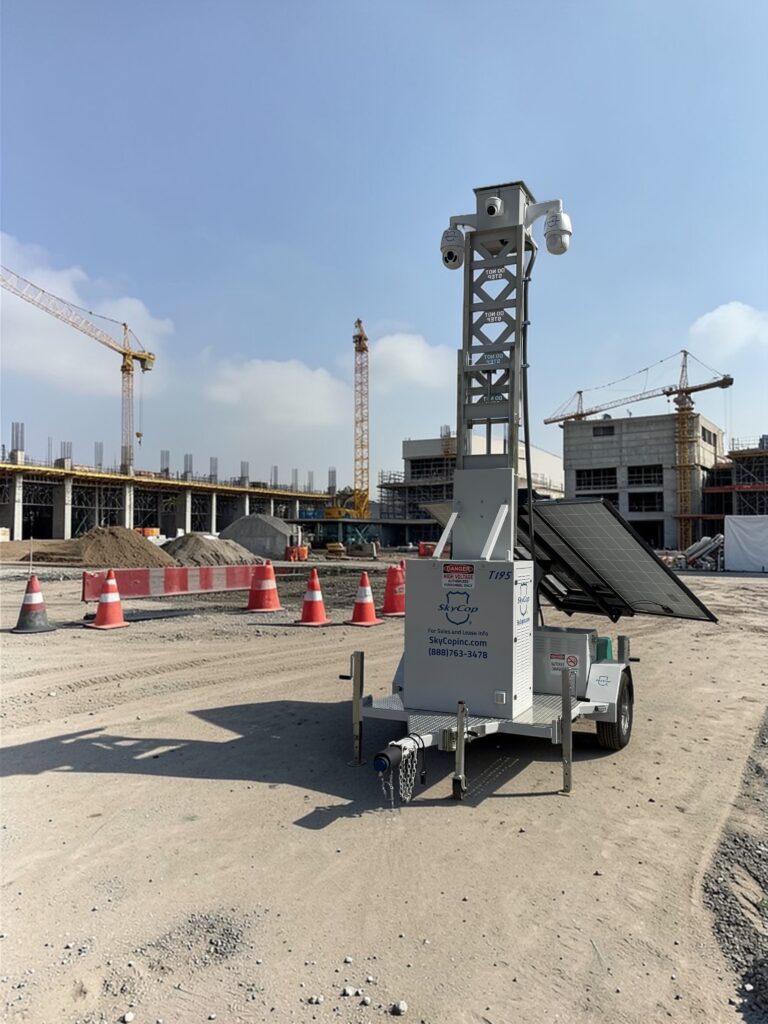
Mobile surveillance trailers are designed for flexibility, so they can be moved and positioned to monitor areas that fixed cameras cannot easily see. For example, a trailer can be placed near a back lot, construction entrance, overflow parking area, temporary event perimeter, equipment storage zone, or remote access point.
Mobile surveillance units are fully self-contained and engineered for rapid deployment with no existing infrastructure required. They are built for temporary events, construction sites, remote areas, and emergency response scenarios where security needs may change quickly. With solar power offerings, local and cloud-based storage, and real-time system health monitoring, these trailers can help provide reliable coverage where permanent camera installation may not be practical.
Alerts, Lights, Sound, and AI Add Another Layer of Response
Monitoring a blind spot is not just about recording footage, it is also about detecting activity and helping security teams respond. Mobile surveillance trailers include AI detection capabilities that can support proactive monitoring and alerts. Their integrated sound features, including speakers and microphones, can help broadcast warnings while also capturing audio evidence when appropriate.
Lighting also plays a major role in surveillance performance. Without sufficient lighting, cameras may capture dark or unclear footage that limits situational awareness and can create additional security blind spots [3]. Trailers use bright, strategically placed lights to illuminate monitored areas, improve video quality at night, and make the trailer’s presence clear to anyone nearby.
Mobile surveillance trailers can also support advanced detection options, including thermal detection and gunshot detection. Thermal imaging can help identify heat signatures in darkness or difficult conditions, while gunshot detection can trigger immediate alerts when firearm activity is detected.
Better Coverage for Changing or Temporary Sites
Some properties do not have static security needs. For example, a construction site may shift its equipment storage from one area to another, while a parking lot may need added coverage during peak hours. Additionally, a public event may create temporary access points, but a business may discover that a side entrance or loading zone is not being monitored effectively.
Mobile surveillance trailers are useful in these situations because they are not locked into one permanent location. They can be deployed, repositioned, and adjusted as the risk changes. Their size, visibility, lights, and audio features also make them a strong overt security tool, helping deter unwanted activity while supporting remote monitoring and faster response.
Strengthen Coverage Where Fixed Cameras Cannot Reach with SkyCop Mobile Surveillance Trailers
Blind spots can leave important areas exposed, but they do not have to stay that way. SkyCop mobile surveillance trailers give organizations a flexible way to extend visibility, monitor hard to see areas, and support real-time alerts without relying solely on fixed camera infrastructure.
If your property has temporary security needs, changing site conditions, or areas that current cameras cannot fully cover, SkyCop can help you deploy a mobile surveillance solution built for visibility, deterrence, and response. To learn how mobile surveillance trailers can help protect your site, connect with SkyCop today.
Sources:
What Are the Internet Connectivity Options for SkyCop Security Camera Enclosures?
Reliable internet connectivity is an important part of an effective surveillance system. Whether monitoring a construction site, commercial property, or…
5 Important Features to Look for in Construction Site Surveillance Cameras
Construction sites face unique security challenges, from expensive equipment and building materials to constantly changing layouts and access points. Choosing…

How SkyCop LPR Software Helps to Detect & Prevent Unauthorized License Plate Searches
License plate recognition (LPR) technology helps law enforcement identify stolen vehicles, respond to alerts, and investigate criminal activity. However, as…